Brighton beach litter pickers bag 50-kilos of rubbish
A power worker dismayed by the impact litter has on the Sussex coastline has rallied volunteers behind a cause close to her heart.
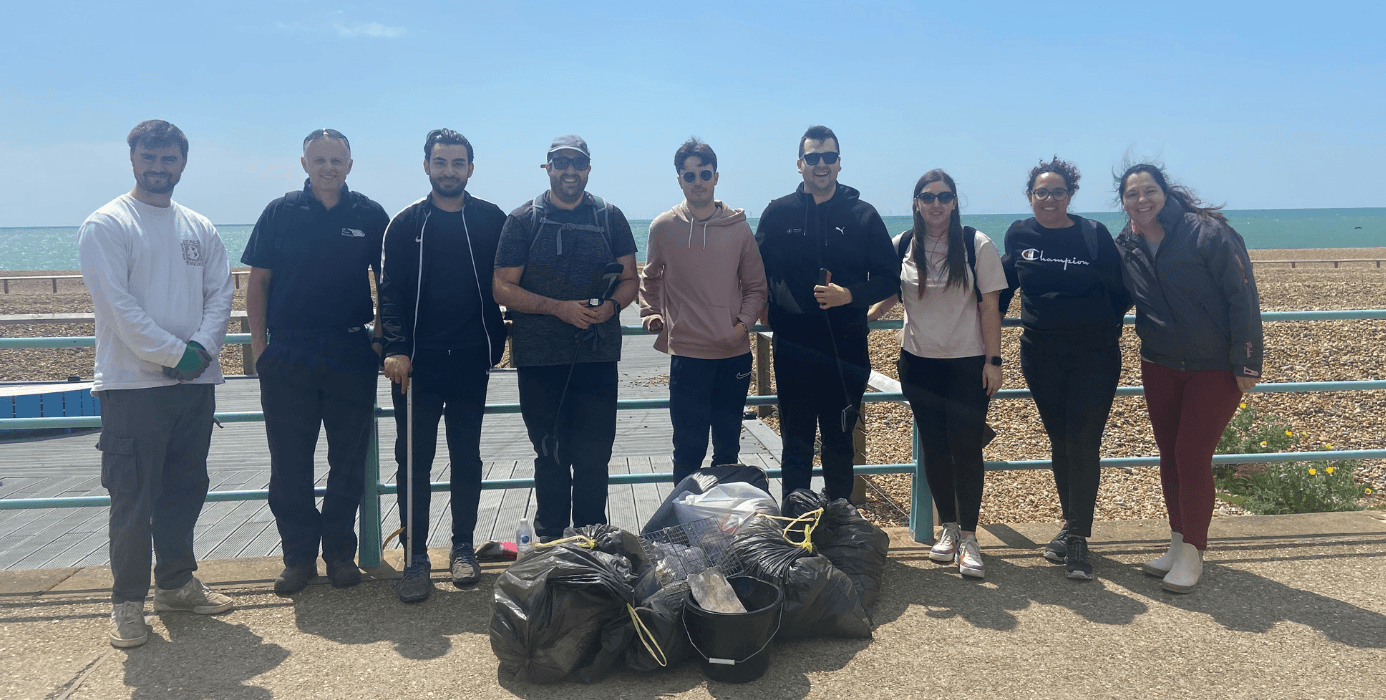
UK Power Networks’ finance manager, Clair Cliff, plans four Sussex beach cleans with colleagues this year, and they started work this week by Volk’s Electric Railway in Brighton.
The team collected 50-kilograms of rubbish from the beach ahead of World Ocean Day on Saturday (June 8), including rope, plastic lids, straws, fast food chain cups, fishing nets, broken bottles, vapes, a dog collar and barbecue grill.
Data collected from the beach clean will support the Marine Conservation Society’s litter survey, which helps drive positive change for beaches and sealife.
The team, normally based in Hazelwick Avenue, Crawley, gave their time through UK Power Networks’ Donate a Day scheme, which gives staff two paid days each year to volunteer in the local community.
Clair said: “We thought the beach looked clean when we arrived but once we looked closer there was still a lot of rubbish. We got pebble blind looking down at lots of pebbles, but it’s easy to spot the rubbish, it sticks out like a sore thumb.
“We were thanked by members of the public as we worked along the beach and Volk’s Electric Railway team kept honk honking us their encouragement. It was a really nice atmosphere and we will be doing it again soon.
“I love Donate a Day employee volunteering. It’s a brilliant way to get out of the office and do something feelgood for our local communities.”
Clair lives by the sea at Eastbourne and has completed the Marine Conservation Society’s training course to help her take proactive action about the rubbish which is either dumped, washed up or blows away on Sussex beaches.
Her message to other beach goers is this: “Either leave the beaches as you find them, or better than you find them. If you find rubbish, pick it up. Most have beach bins where you can leave rubbish bags. Don’t let rubbish blow away into the sea, because it doesn’t degrade, and ends up in our food chain as small plastic particles.
“I want to help raise awareness about what ends up on our beaches and encourage the behaviour that will help protect our sea. I hope our beach clean can inspire others to at least think about it and I’m pleased we’ve left this beach cleaner than it was when we found it.”
Clair has seen the fragility of ocean wildlife first-hand. While walking her dog at Norman Bay, Eastbourne, on 16 December they found an abandoned seal pup with a damaged tail and called in East Sussex Wildlife Rescue and Ambulance Service (WRAS) volunteers. The pup was named Norman after the bay where he was found and was said to be doing well.
Trevor Weeks, founder and operations director at WRAS, said: “At WRAS, we frequently encounter injured wildlife caught in fishing gear or discover seabirds that have drowned due to discarded nets. This winter, we have also had to handle numerous seabirds covered in oil. The dangers of microplastics, found in various wildlife, are widely known, posing a threat to these animals. Initiatives like this one, aimed at cleaning up our environment, play a crucial role in preserving nature and protecting our planet.”
Published: 07/06/24
UK Power Networks’ finance manager, Clair Cliff, plans four Sussex beach cleans with colleagues this year, and they started work this week by Volk’s Electric Railway in Brighton.
The team collected 50-kilograms of rubbish from the beach ahead of World Ocean Day on Saturday (June 8), including rope, plastic lids, straws, fast food chain cups, fishing nets, broken bottles, vapes, a dog collar and barbecue grill.
Data collected from the beach clean will support the Marine Conservation Society’s litter survey, which helps drive positive change for beaches and sealife.
The team, normally based in Hazelwick Avenue, Crawley, gave their time through UK Power Networks’ Donate a Day scheme, which gives staff two paid days each year to volunteer in the local community.
Clair said: “We thought the beach looked clean when we arrived but once we looked closer there was still a lot of rubbish. We got pebble blind looking down at lots of pebbles, but it’s easy to spot the rubbish, it sticks out like a sore thumb.
“We were thanked by members of the public as we worked along the beach and Volk’s Electric Railway team kept honk honking us their encouragement. It was a really nice atmosphere and we will be doing it again soon.
“I love Donate a Day employee volunteering. It’s a brilliant way to get out of the office and do something feelgood for our local communities.”
Clair lives by the sea at Eastbourne and has completed the Marine Conservation Society’s training course to help her take proactive action about the rubbish which is either dumped, washed up or blows away on Sussex beaches.
Her message to other beach goers is this: “Either leave the beaches as you find them, or better than you find them. If you find rubbish, pick it up. Most have beach bins where you can leave rubbish bags. Don’t let rubbish blow away into the sea, because it doesn’t degrade, and ends up in our food chain as small plastic particles.
“I want to help raise awareness about what ends up on our beaches and encourage the behaviour that will help protect our sea. I hope our beach clean can inspire others to at least think about it and I’m pleased we’ve left this beach cleaner than it was when we found it.”
Clair has seen the fragility of ocean wildlife first-hand. While walking her dog at Norman Bay, Eastbourne, on 16 December they found an abandoned seal pup with a damaged tail and called in East Sussex Wildlife Rescue and Ambulance Service (WRAS) volunteers. The pup was named Norman after the bay where he was found and was said to be doing well.
Trevor Weeks, founder and operations director at WRAS, said: “At WRAS, we frequently encounter injured wildlife caught in fishing gear or discover seabirds that have drowned due to discarded nets. This winter, we have also had to handle numerous seabirds covered in oil. The dangers of microplastics, found in various wildlife, are widely known, posing a threat to these animals. Initiatives like this one, aimed at cleaning up our environment, play a crucial role in preserving nature and protecting our planet.”
Published: 07/06/24