Londoners go through enough power to make over 850 billion cups of tea
Newly released data from UK Power Networks shows that Londoners have used enough power to make over 850 billion cups of tea in 12 months.
The electricity firm that delivers power to 8.5 million homes and businesses across London, the South East and the East has recently released data on the amount of energy in gigawatt hours (GWh) that has made its way to the approximately 20 million people on its network in the 2024/25 period from April to March.
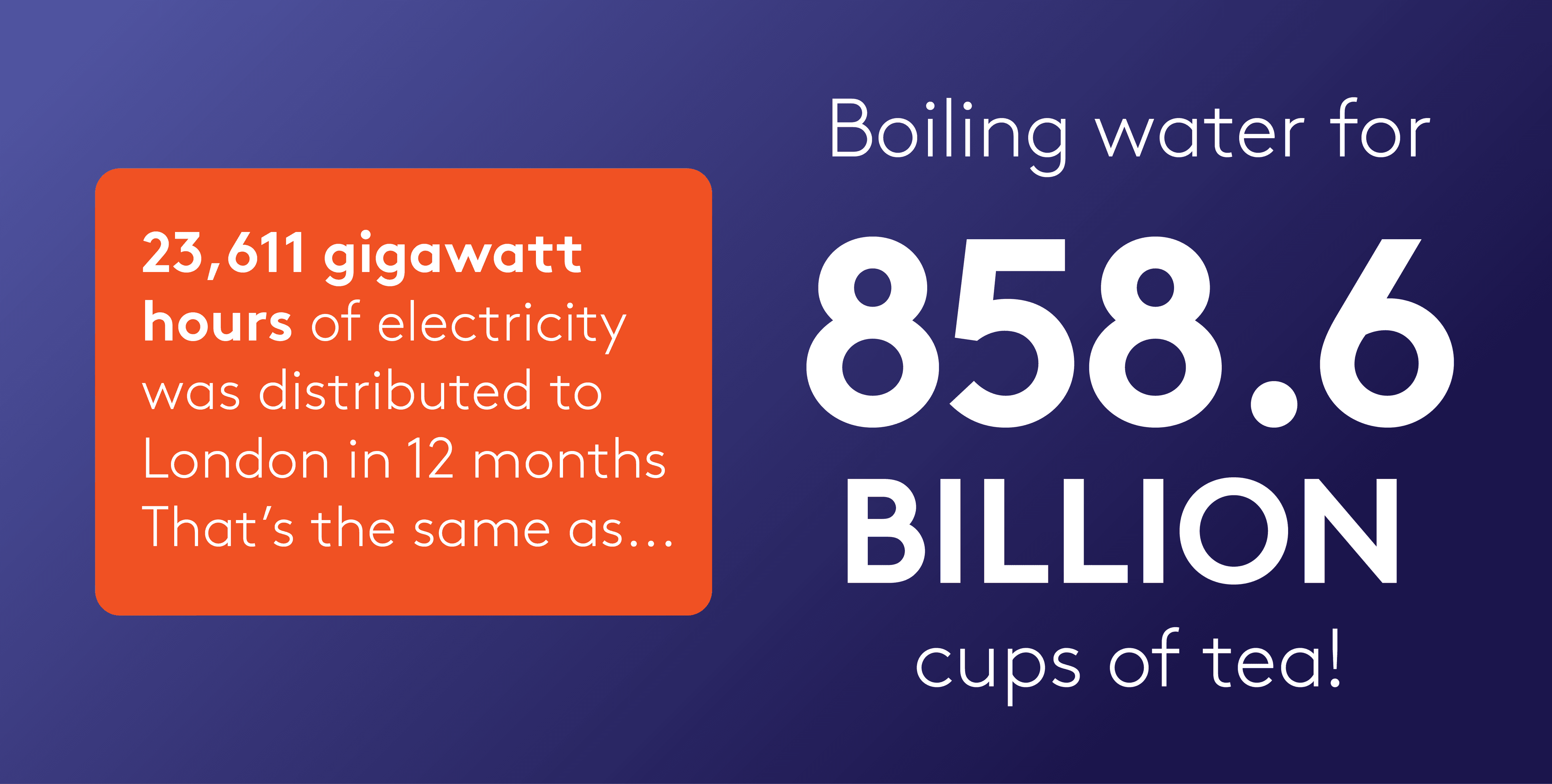
The data shows Londoners received 23,611 GWh – or 858,600,000,000 cups of tea* – representing a slight decrease from the 23,656 GWh used in the 2023/24 period, despite a 0.19% increase in customers, rising from 2,415,875 to 2,420,495, and a 0.40% rise in network-wide peak demand.
The capital's electricity network has a 99.99% reliability rate and remains the most reliable network in the country, with the lowest number of, and shortest, power cuts.
In the same period, both the East and the South East showed growth in customer numbers and had an increase in power distributed to homes and businesses.
The East saw a 0.12% increase in customers, rising from 3,707,444 to 3,712,071, while the South East rose by 0.31%, from 2,351,552 to 2,358,803. Energy distribution also increased, with the East up by 0.79% and the South East by 1.24%.
Head of network operations for London, Kevin Scarpenter, said: "London’s power network continues to set the standard for reliability and performance, serving over 2.4 million homes and businesses. With a 99.99% reliability rate, the best in the country, we’re proud to keep the lights on for London, every day and night, no matter what challenges come our way.”
In the past year, the electricity firm has invested more than £983 million in reinforcing and upgrading its infrastructure to ensure customers can keep the lights on and enjoy a hot drink.
The data is used by the company to calculate its in-year performance for regulatory reporting, but forecasting tools are used to determine capital delivery spending. Forecasting peak demand at primary substations determines network reinforcement, which contributes to investment decisions.
* Based on the assumption that it takes 0.11 kWh to boil 1 litre of water, and each litre yields four cups.
With hot drinks not everybody’s cup of tea, the electricity distributed to London can be measured in other ways:
The electricity firm that delivers power to 8.5 million homes and businesses across London, the South East and the East has recently released data on the amount of energy in gigawatt hours (GWh) that has made its way to the approximately 20 million people on its network in the 2024/25 period from April to March.
The data shows Londoners received 23,611 GWh – or 858,600,000,000 cups of tea* – representing a slight decrease from the 23,656 GWh used in the 2023/24 period, despite a 0.19% increase in customers, rising from 2,415,875 to 2,420,495, and a 0.40% rise in network-wide peak demand.
The capital's electricity network has a 99.99% reliability rate and remains the most reliable network in the country, with the lowest number of, and shortest, power cuts.
In the same period, both the East and the South East showed growth in customer numbers and had an increase in power distributed to homes and businesses.
The East saw a 0.12% increase in customers, rising from 3,707,444 to 3,712,071, while the South East rose by 0.31%, from 2,351,552 to 2,358,803. Energy distribution also increased, with the East up by 0.79% and the South East by 1.24%.
Head of network operations for London, Kevin Scarpenter, said: "London’s power network continues to set the standard for reliability and performance, serving over 2.4 million homes and businesses. With a 99.99% reliability rate, the best in the country, we’re proud to keep the lights on for London, every day and night, no matter what challenges come our way.”
In the past year, the electricity firm has invested more than £983 million in reinforcing and upgrading its infrastructure to ensure customers can keep the lights on and enjoy a hot drink.
The data is used by the company to calculate its in-year performance for regulatory reporting, but forecasting tools are used to determine capital delivery spending. Forecasting peak demand at primary substations determines network reinforcement, which contributes to investment decisions.
* Based on the assumption that it takes 0.11 kWh to boil 1 litre of water, and each litre yields four cups.
With hot drinks not everybody’s cup of tea, the electricity distributed to London can be measured in other ways:
Activity or Device | Approximate Quantity Powered |
|---|---|
Electric car full charges | 314.8 million times |
iPhone full charges | 1.86 trillion times |
Air fryer batches | 47.2 billion batches |
LED bulb hours (10W) | 2.36 trillion hours |
Laptop full charges | 472.2 billion times |
Refrigerator running for a day | 15.7 billion days |
Washing machine cycles | 47.2 billion cycles |
Electric oven use for 1 hour | 10.27 billion hours |
Electric bus full charges | 78.7 million times |
Google searches | 78.7 trillion searches |
Streaming 1 hour of HD video | 157.4 billion hours |
Published 08/10/2025
Published 08/10/2025