Nightingale-friendly habitat boost hits the right note
An important nightingale breeding ground in Barcombe had a biodiversity boost when local conservationists teamed up with power company tree cutters
Tree surgeons for UK Power Networks worked alongside Barcombe Community Wildlife Group during tree cutting round power lines, to help keep power supplies safe and reliable for villagers, while protecting a key nightingale habitat.
The village’s disused railway track provides a rich wildlife corridor either side of power lines that attracts migrating summer birds including blackcap, chiffchaff and lesser whitethroat.
Simon Linington, from Barcombe Community Wildlife Group, said: “Either side of the power lines there are trees, bushes, scrub and banks which provide habitat for migrating birds. In April there is a lot of bird song and the icing on the cake is the nightingale’s song.
“The nightingale is quite a scarce bird now in Britain and the local population, mainly centred on the railway line where the power cables are, is one of the most important in Sussex.
“If the area was left it would turn into an impenetrable mass of scrub, not that valuable as a wildlife habitat. Once it grows up into dense vegetation there is no light for flowers, and it is unsuitable for a lot of birds. Every so often, clearing bits along the corridor benefits wildlife.
“This has been done in a sympathetic way and people are pleased the nightingales should find somewhere to feed, which is an important factor in where they choose to breed. These open areas are good for butterflies, damselflies and an array of flowering plants, particularly violets in spring.”
Tree surgeons carefully followed guidance on how to enhance the wildlife corridor along the 33,000-volt 3km route, to encourage wildlife for nightingales, while maintaining network resilience.
Sam Smith, from the power firm’s contractors TreeSmiths, said: “When I surveyed the route I met a lot of walkers from village groups who discussed the presence of nightingales. Planning always comes first and a lot of people were involved.
“We got the team along before any cutting was done for a thorough site briefing where Simon explained exactly how they wanted it done. The team worked well and took care to follow the instructions, which enabled the job to go so well.
“We usually cut to ground level, but Simon wanted vegetation at varying heights for the nightingales because they like to nest low and they like cover. The local conservation team worked brilliantly with us and it was a pleasure to work alongside the wilding project and enhance it through good planning on all sides.
“It’s a brilliant habitat for nightingales and residents explained the insects they want to encourage. Working together has enhanced their project. There are lots of ways we can cut to enhance wildlife.”
The vegetation was turned into wood chip mulch going back into the soil and the team has created wood stacks against the banks to nurture insect habitats.
Heather Patrick, environment adviser at UK Power Networks, said: “Nightingales are one of our iconic summer song birds so it was really pleasing that these essential works could be done in a way that improved their habitat. By working closely with the local community and wildlife groups, our team and contractors were able to ensure the best outcome for biodiversity.”
UK Power Networks is also making smarter use of data to help prevent power cuts and save trees as part of its £19million tree trimming programme. The company’s analytics team has designed a new computerised tool for tree-cutting colleagues to best decide when, where and how to clear trees and bushes away from power lines. Read article to find out more.
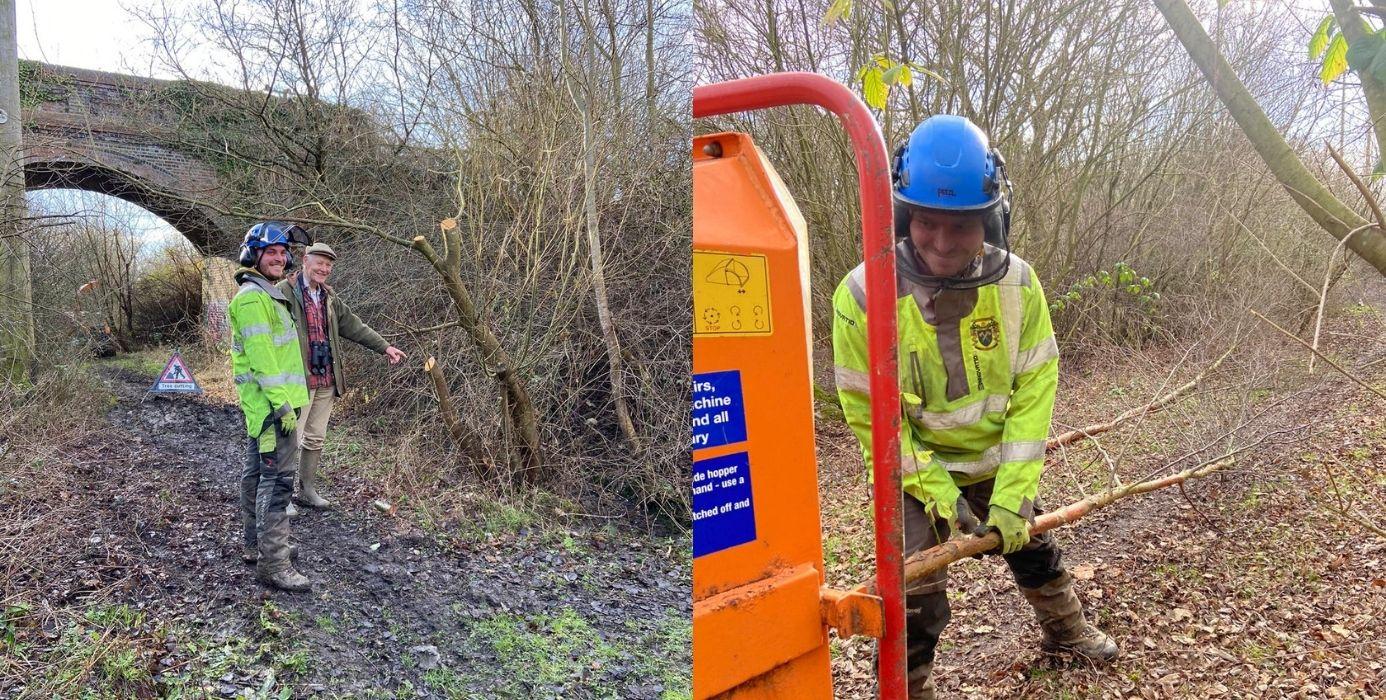
Tree surgeons for UK Power Networks worked alongside Barcombe Community Wildlife Group during tree cutting round power lines, to help keep power supplies safe and reliable for villagers, while protecting a key nightingale habitat.
The village’s disused railway track provides a rich wildlife corridor either side of power lines that attracts migrating summer birds including blackcap, chiffchaff and lesser whitethroat.
Simon Linington, from Barcombe Community Wildlife Group, said: “Either side of the power lines there are trees, bushes, scrub and banks which provide habitat for migrating birds. In April there is a lot of bird song and the icing on the cake is the nightingale’s song.
“The nightingale is quite a scarce bird now in Britain and the local population, mainly centred on the railway line where the power cables are, is one of the most important in Sussex.
“If the area was left it would turn into an impenetrable mass of scrub, not that valuable as a wildlife habitat. Once it grows up into dense vegetation there is no light for flowers, and it is unsuitable for a lot of birds. Every so often, clearing bits along the corridor benefits wildlife.
“This has been done in a sympathetic way and people are pleased the nightingales should find somewhere to feed, which is an important factor in where they choose to breed. These open areas are good for butterflies, damselflies and an array of flowering plants, particularly violets in spring.”
Tree surgeons carefully followed guidance on how to enhance the wildlife corridor along the 33,000-volt 3km route, to encourage wildlife for nightingales, while maintaining network resilience.
Sam Smith, from the power firm’s contractors TreeSmiths, said: “When I surveyed the route I met a lot of walkers from village groups who discussed the presence of nightingales. Planning always comes first and a lot of people were involved.
“We got the team along before any cutting was done for a thorough site briefing where Simon explained exactly how they wanted it done. The team worked well and took care to follow the instructions, which enabled the job to go so well.
“We usually cut to ground level, but Simon wanted vegetation at varying heights for the nightingales because they like to nest low and they like cover. The local conservation team worked brilliantly with us and it was a pleasure to work alongside the wilding project and enhance it through good planning on all sides.
“It’s a brilliant habitat for nightingales and residents explained the insects they want to encourage. Working together has enhanced their project. There are lots of ways we can cut to enhance wildlife.”
The vegetation was turned into wood chip mulch going back into the soil and the team has created wood stacks against the banks to nurture insect habitats.
Heather Patrick, environment adviser at UK Power Networks, said: “Nightingales are one of our iconic summer song birds so it was really pleasing that these essential works could be done in a way that improved their habitat. By working closely with the local community and wildlife groups, our team and contractors were able to ensure the best outcome for biodiversity.”
UK Power Networks is also making smarter use of data to help prevent power cuts and save trees as part of its £19million tree trimming programme. The company’s analytics team has designed a new computerised tool for tree-cutting colleagues to best decide when, where and how to clear trees and bushes away from power lines. Read article to find out more.
Keep up to date
Follow us on LinkedIn, Twitter and Facebook for our latest news and updates.