Bee rescuer finds substation is a hive of activity
Bee experts created a buzz when they rescued 50,000 honeybees that had made their home inside the walls of an electricity substation in Norfolk.
The busy bees had spent the last couple of years settling into the wall cavity of a brick building at Hempton near Fakenham, where they made honey as the colony grew.
Concerned engineers at UK Power Networks called in expert help from specialist bee rescuer Gary Hipperson, to rescue and rehome the colony.
The rescue took all day as Gary said that the area has a problem with bee disease, so bio security measures were extremely important as well as the safety of himself and removals technician Tristan South. They also had to take extra safety advice from UK Power Networks staff as they were working in close proximity to electrical equipment.
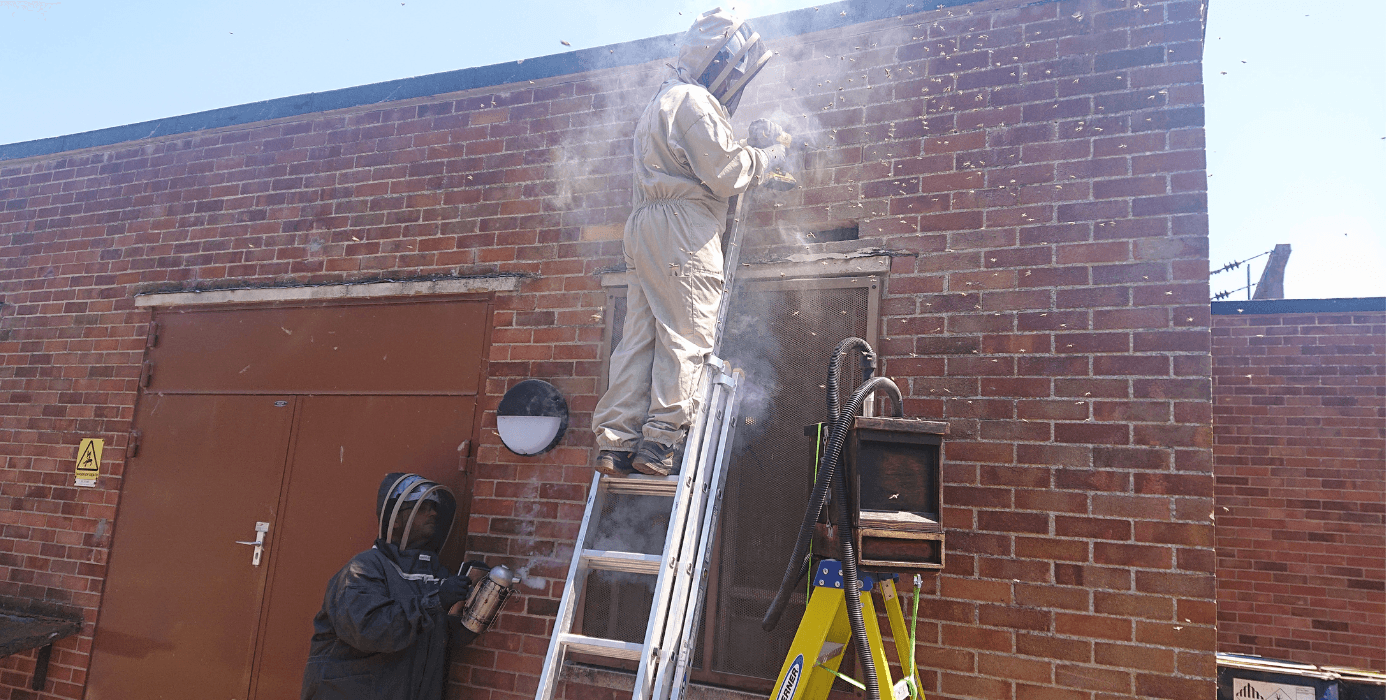
Gary explained that they took two bricks out of the wall from the outside and put in a camera to check the size of the colony. He had to cut out the individual honeycombs by hand, carefully move the bees out of the wall using a special vacuum and put them in a bee collection box next to the entrance they had created.
Gary took the large colony back to Heath Farmhouse at Great Bircham, where they were treated and put into quarantine for 76 days.
At the end of their quarantine the healthy colony will be moved to nearby organic farmland where they can live happily and produce honey.
He said: “It was a large colony and a difficult rescue because of the position of so many in a small building. I am pleased we were able to save and rehome the bees, we always do everything we can to save them.”
Heather Patrick environmental adviser at UK Power Networks said:” “When we find honey bees living in a substation our first approach is to try to just leave them and put up signs to warn staff of their presence. If they do pose a hazard we try to find a beekeeper who can rehome them. I’m so glad that when these bees started to cause concern, the local field engineer was determined to protect them and found a beekeeper who successfully extracted them and will give them a new home.”
The busy bees had spent the last couple of years settling into the wall cavity of a brick building at Hempton near Fakenham, where they made honey as the colony grew.
Concerned engineers at UK Power Networks called in expert help from specialist bee rescuer Gary Hipperson, to rescue and rehome the colony.
The rescue took all day as Gary said that the area has a problem with bee disease, so bio security measures were extremely important as well as the safety of himself and removals technician Tristan South. They also had to take extra safety advice from UK Power Networks staff as they were working in close proximity to electrical equipment.
Gary explained that they took two bricks out of the wall from the outside and put in a camera to check the size of the colony. He had to cut out the individual honeycombs by hand, carefully move the bees out of the wall using a special vacuum and put them in a bee collection box next to the entrance they had created.
Gary took the large colony back to Heath Farmhouse at Great Bircham, where they were treated and put into quarantine for 76 days.
At the end of their quarantine the healthy colony will be moved to nearby organic farmland where they can live happily and produce honey.
He said: “It was a large colony and a difficult rescue because of the position of so many in a small building. I am pleased we were able to save and rehome the bees, we always do everything we can to save them.”
Heather Patrick environmental adviser at UK Power Networks said:” “When we find honey bees living in a substation our first approach is to try to just leave them and put up signs to warn staff of their presence. If they do pose a hazard we try to find a beekeeper who can rehome them. I’m so glad that when these bees started to cause concern, the local field engineer was determined to protect them and found a beekeeper who successfully extracted them and will give them a new home.”